Count what is actually charged together
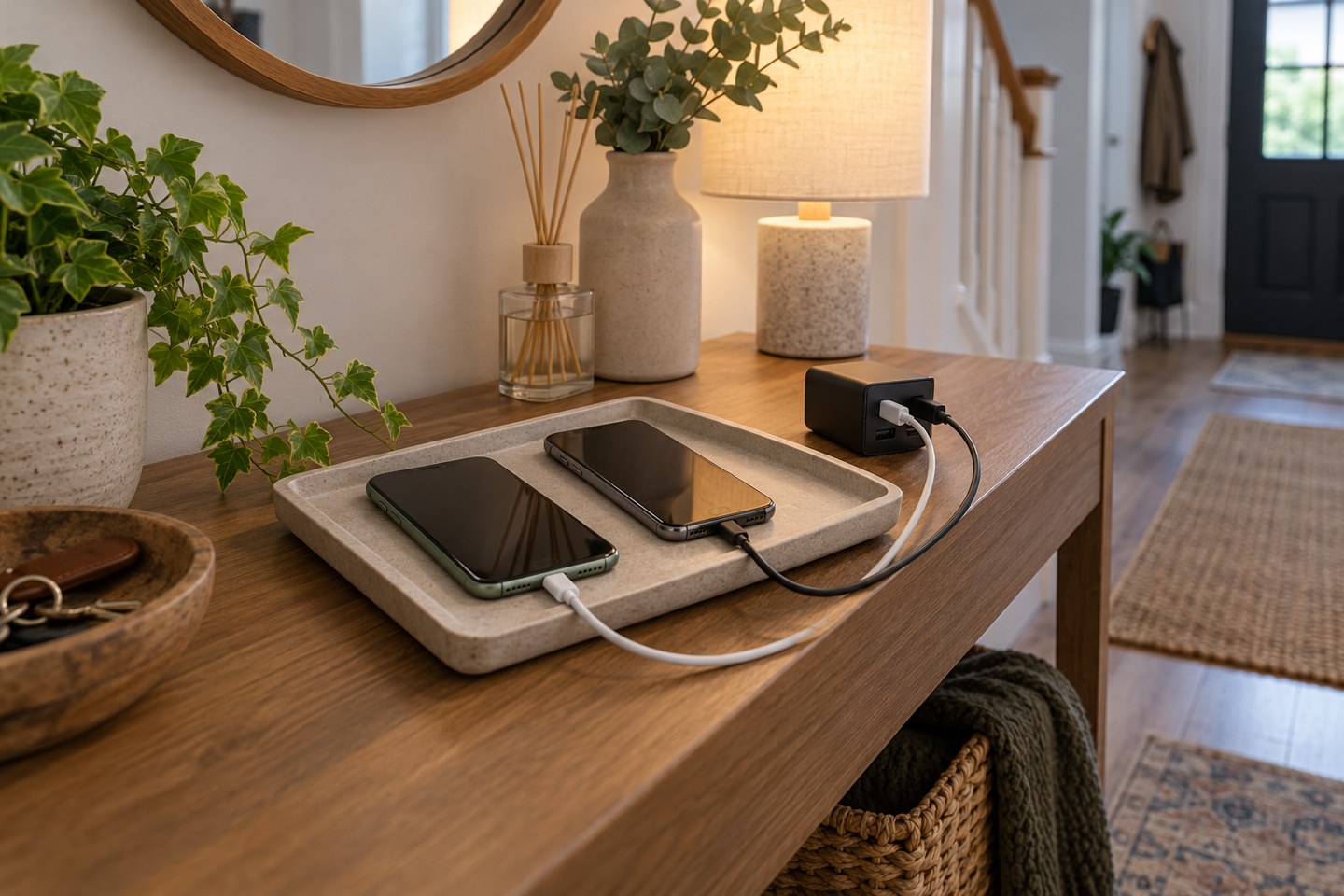
List the phones, headphones and other devices that regularly need the spot. Note the connector and charging requirements for each. A multiport charger can reduce clutter, but check its output when several ports are occupied rather than looking only at the largest number on the box.
Remove obsolete cables from the daily area. Keep a labelled spare elsewhere if it still has a use. A shared charging point becomes easier to understand when every visible cable has a current purpose and reaches the place where its device will rest.
Choose an open, stable surface
Use a hard, stable surface with room around the devices and chargers. Electrical Safety First advises against charging on beds, sofas or under pillows because these arrangements can trap heat. Do not turn a decorative closed box into a charging enclosure unless the equipment is specifically designed for that use.
Keep drinks away and route cables so a passing bag cannot pull a phone to the floor. Avoid balancing devices on the edge of a shelf simply to reach a short lead. A longer suitable cable may be a better solution than an awkward stack of chargers and adapters.
Make the routine obvious
Assign each cable a simple position and use a suitable loose clip to stop the end falling behind the furniture. Leave enough slack to connect and remove the device comfortably. Do not bend a connector sharply against the edge of a tray.
Check cables and chargers periodically for damage. Replace unsuitable or damaged parts through the manufacturer or a reputable retailer, and stop using equipment showing concerning heat, swelling or damage. Tidying the visible part of a frayed cable does not repair it.
Try the arrangement with all the normal devices present, then check that each is charging as expected. If people keep borrowing cables from elsewhere, find out which requirement the spot is missing before adding more sockets. A useful shared station is a small practical arrangement that everyone can use without rearranging it first.