Record the battery before you hide it
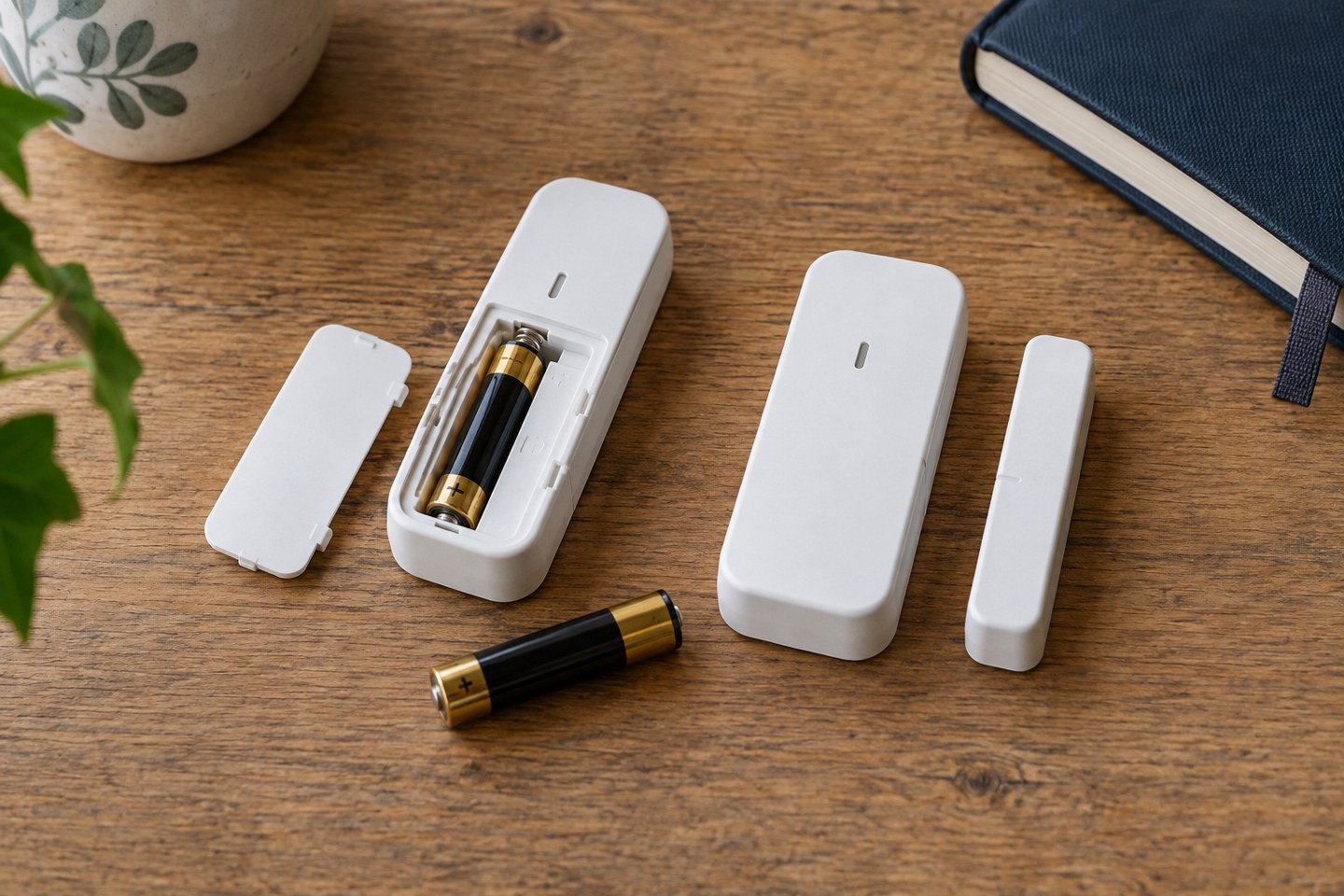
When fitting a sensor, note its model, room, battery type and installation date. Keep the information somewhere you can find without taking the device down. Similar-looking coin cells and other batteries are not automatically interchangeable; use the type and orientation specified by the manufacturer.
Keep spare and removed button batteries away from children and pets, and use the appropriate local collection route for disposal. Do not leave a loose cell on the shelf while looking for a screwdriver. The maintenance job is not finished until the battery compartment is secured and the old battery is dealt with.
Watch behaviour as well as the percentage
Treat a reported percentage as a useful indicator rather than an exact countdown. Check whether the device is still reporting ordinary events. If a door sensor appears stuck, open and close the door while watching its event history. This distinguishes a missing update from an automation that received the event but failed to act.
Before replacing a battery unexpectedly early, check the device's connection and operating environment against its manual. Do not promise a particular life based only on a marketing figure; use patterns differ. For example, the Tapo T100 specifies its own battery and maintenance process, which should not be copied blindly to another sensor.
Verify the replacement
Follow the model's instructions for opening the compartment. Fit the correct battery, close the housing and trigger a normal event. Then check the associated light or notification. A newly fitted battery does not prove the whole rule is working.
Update the record with the replacement date and any unusual symptoms. If one sensor repeatedly needs attention while similar devices do not, that history is useful when contacting support. Keep the description concrete: location, battery type, dates and observed events.
Finally, choose a maintenance rhythm that fits your household. A quick periodic check of low-battery notices and a few important sensor events is more practical than waiting until a routine has quietly stopped working for several weeks.