Define the useful patch of floor
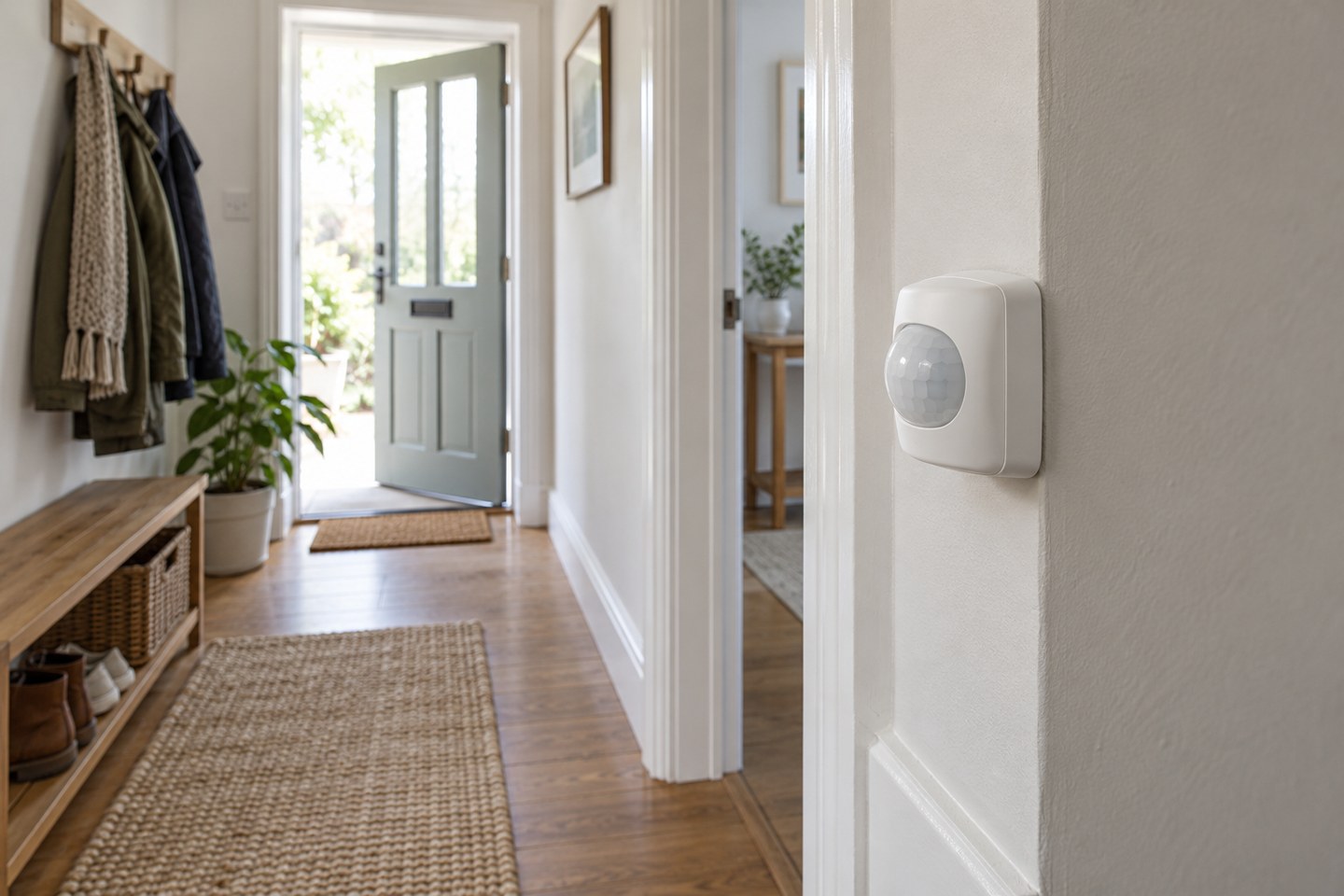
Decide where a person should be when the light comes on. In a hallway, that may be just inside the doorway. In a utility room, it may be the route from the door to the worktop. Detecting the largest possible area is not always desirable: movement in an adjoining room can become a constant unwanted trigger.
Read the sensor's detection pattern, mounting guidance and environmental limits. Motion sensors use different technologies and have different coverage. For example, the Tapo T100 offers adjustable sensitivity, but those settings and its stated range belong to that model. They are not universal placement measurements for other products.
Trial the position before fixing it
Use a secure temporary position permitted by the manufacturer. Keep it at roughly the intended height and angle, then walk the normal route at an ordinary pace. Watch the sensor's event indicator or app history as well as the lamp. This separates missed detection from a detected event that failed to run the automation.
Try entering from both directions. Test with the door open and closed, and with the objects that usually occupy the room in place. A coat hung on a hook or a tall box can change the usable view. Do not assess an empty hallway and assume it will behave identically when furnished.
Avoid pointing the sensor somewhere merely because it is an easy mounting surface. Follow the manual's advice about windows, heat sources and other potential disturbances. If the device is intended for indoors, a covered porch is not automatically a suitable substitute for a properly rated outdoor model.
Tune the rule as well as the sensor
If supported, restrict the action to the hours or light levels when artificial lighting is useful. Begin with a simple condition so you can see whether it is working. Add a sensible off delay for the room, then test what happens when somebody remains still. A movement detector should not be assumed to know continuously that a person is present.
A kitchen or desk area may need a manual override because people can work quietly without crossing the sensor's view. A short corridor is a different use case. Match the behaviour to the activity rather than copying a delay from another room.
Make maintenance possible
Choose a position where battery replacement or cleaning does not require dismantling furniture. Record the battery type and retain any supplied mounting parts. Confirm that the sensor still communicates reliably from its final position; successful setup close to the hub does not establish coverage at the other end of the house.
After permanent mounting, repeat the walking test and check for unwanted events over normal household activity. Change one thing at a time: position, sensitivity or rule. That makes it much easier to identify which adjustment actually improved the result.